




Positioning Over Financing: The Real Key to Construction Business Growth
By Stefon Case studies, WaterWorks Agency
One of the biggest mistakes I see construction business owners make is assuming that financing is the solution. Most of the time, financing is not the solution. Positioning is.
I’ve reviewed companies generating hundreds of thousands of dollars in annual revenue that still struggle to qualify for better financing options.
-
Not because they lack work.
-
Not because they lack customers.
-
Not because they lack experience.
But because the financial profile behind the business isn’t aligned with what lenders are looking for.
The result is a cycle that many contractors know all too well: A project starts. Materials need to be purchased. Payroll is due. Equipment needs repairs. Cash flow tightens. The owner uses credit cards. Utilization rises. The next project begins. The cycle repeats. Eventually, the contractor finds themselves relying on expensive short-term capital simply to maintain operations.
Why Construction Businesses Face Unique Financing Challenges
Construction is one of the most cash-intensive industries in America. Unlike many businesses that collect payment immediately, contractors often spend money weeks or months before collecting revenue. A single project may require:
-
Materials
-
Labor
-
Equipment rentals
-
Fuel
-
Permits
-
Insurance
-
Subcontractor deposits
…all before the first substantial payment is received. This timing mismatch creates one of the biggest financing challenges in the industry. The business may be profitable. The owner may have contracts in place. Future revenue may already be secured. Yet cash flow remains under pressure.
What We Often Discover During Credit Reviews
When a construction company comes to WaterWorks Agency, we typically start by reviewing:
-
Personal and business credit
-
Utilization and existing debt obligations
-
Bank statements and revenue trends
-
Funding objectives
What surprises many owners is that the issue is rarely their credit score alone. The larger issue is often utilization.
For example, a contractor may have three business credit cards, two personal cards used for business expenses, vendor balances, and existing short-term obligations. All accounts may be current—no late payments, no collections, no charge-offs. Yet utilization may be 75%$ to 95%. From an underwriting perspective, that can create concerns even when revenue remains strong.
Why Utilization Matters More Than Most Owners Realize
Think about utilization from a lender’s perspective. If a contractor has $100,000$ in available revolving credit and $92,000$ is currently utilized, the lender sees very little available financial capacity. That doesn’t necessarily mean the business is struggling, but it can indicate increased risk.
High utilization often directly affects approval amounts, interest rates, credit score performance, and future financing options. This is one reason we spend significant time helping business owners understand utilization before they apply.
Where Strategic Working Capital Fits Into the Picture
This is where many business owners become confused. They assume all financing products serve the same purpose. They don’t. Different financing products solve different problems.
-
Short-Term Revenue-Based Capital: Typically designed for speed. It may rely heavily on bank deposits, revenue history, and cash flow instead of extensive documentation. Useful when timing is critical. However, repayment structures can create additional pressure if used repeatedly.
-
Monthly Payment Business Lines of Credit: Often designed to create flexibility. Some programs offer revolving access to capital, monthly payments, and interest-only payment structures during certain periods, with the ability to draw and repay funds as needed. For contractors managing multiple projects simultaneously, this type of structure may create more flexibility than daily repayment products.
-
Bank Term Loans: Often used for debt consolidation, working capital, equipment purchases, construction-related improvements, or business expansion. These products commonly provide fixed monthly payments and repayment terms ranging from two to five years.
-
SBA Working Capital Programs: These programs often offer longer repayment terms, lower monthly payments, debt refinancing opportunities, and working capital support. However, they typically require stronger documentation and underwriting review.
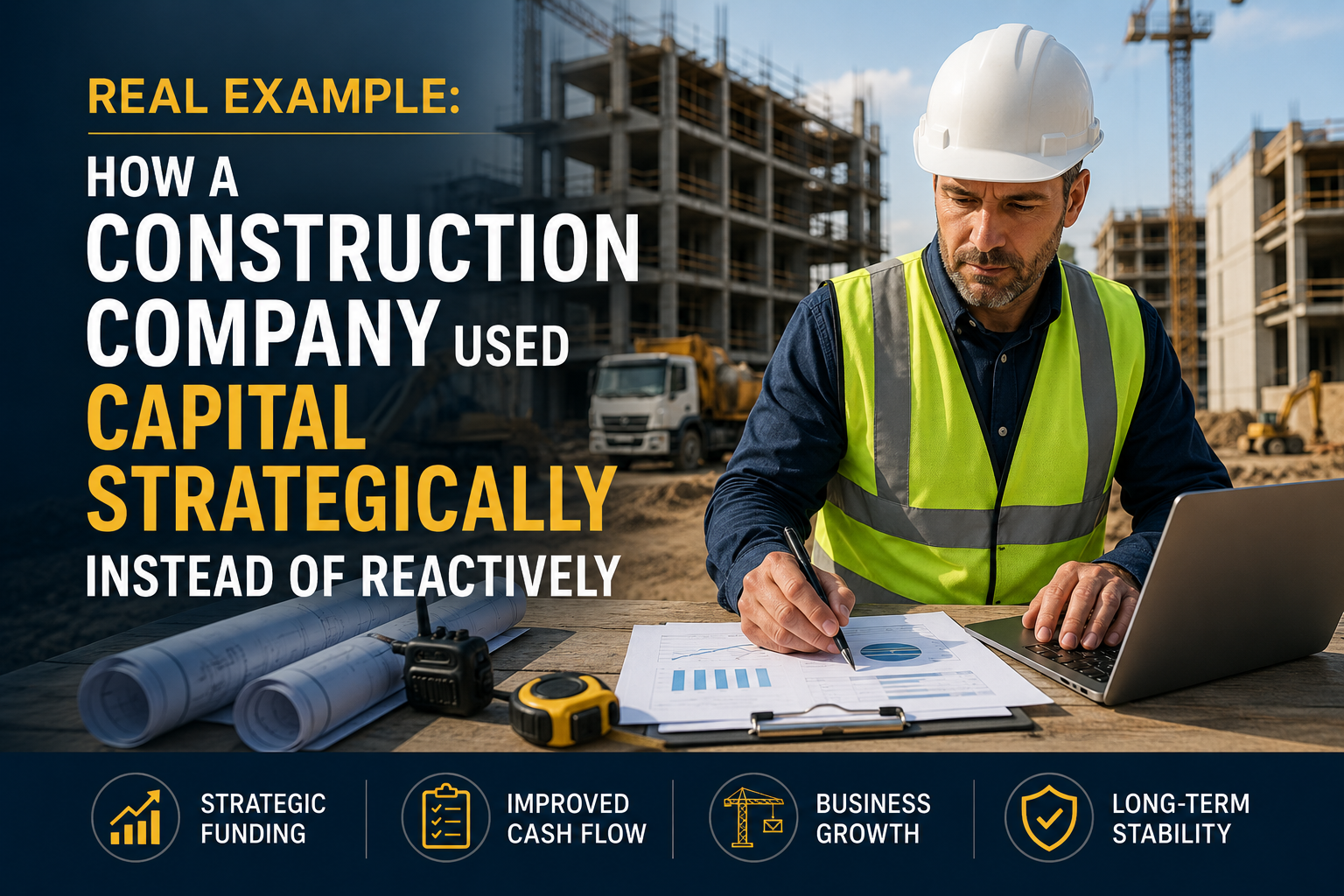
Real Example: How a Construction Company Used Capital Strategically Instead of Reactively
One construction company owner came to us after spending more than a decade building his business. The company had been operating for approximately 15 years, employed around 30 people, and generated roughly $300,000$ per month in revenue.
From the outside, most people would assume the business was thriving. And operationally, it was. Projects were active. Revenue was coming in. Employees were working. Customers were paying.
The challenge wasn’t a lack of business. The challenge was cash-flow pressure. Like many construction companies, the owner was constantly balancing payroll obligations, material purchases, vendor payments, equipment expenses, and existing financing obligations. As project volume increased, so did the need for working capital.
Over time, the owner began relying on multiple financing products simply to keep operations moving. At the same time, several issues were limiting future financing opportunities:
-
High personal credit utilization
-
Existing charge-offs and collection accounts
-
Late-payment history
-
Limited business credit reporting activity
-
Heavy reliance on personal credit to support business operations
The business was generating revenue, but the financial profile was falling behind.
The Mistake Many Owners Make
At this point, many business owners look for another financing product. They assume a larger approval will solve the problem. In reality, additional debt without a strategy often creates more pressure. The objective wasn’t to put this owner into another cycle of borrowing. The objective was to use available capital strategically while improving the foundation underneath the business.
The Strategy
Instead of focusing solely on obtaining financing, we developed a plan that addressed multiple areas simultaneously.
-
Step 1: Improve Business Credit Infrastructure The first priority was reducing dependence on personal credit. We helped the company establish systems designed to strengthen its business credit profile. This included business credit monitoring, vendor reporting relationships, trade account development, business credit reporting activity, and establishing stronger separation between personal and business financing. The goal was creating additional purchasing power through the business itself rather than continually relying on the owner personally.
-
Step 2: Preserve Cash Flow Through Vendor Relationships Construction companies consume materials constantly—lumber, concrete, electrical supplies, fasteners, tools, safety equipment, and maintenance items. Instead of paying cash for every purchase, we focused on helping the company leverage vendor relationships where appropriate. This allowed the business to preserve working capital while continuing operations. Every dollar not immediately leaving the bank account created additional flexibility.
-
Step 3: Reduce Personal Credit Utilization One of the largest underwriting concerns involved revolving credit utilization. Several personal accounts carried substantial balances. Rather than continuing to carry those balances indefinitely, a portion of the company’s available working capital was allocated toward reducing utilization. This was important because utilization directly affects credit score performance, underwriting decisions, future financing opportunities, and personal guarantor strength. Many business owners focus exclusively on credit scores; lenders often pay just as much attention to utilization.
-
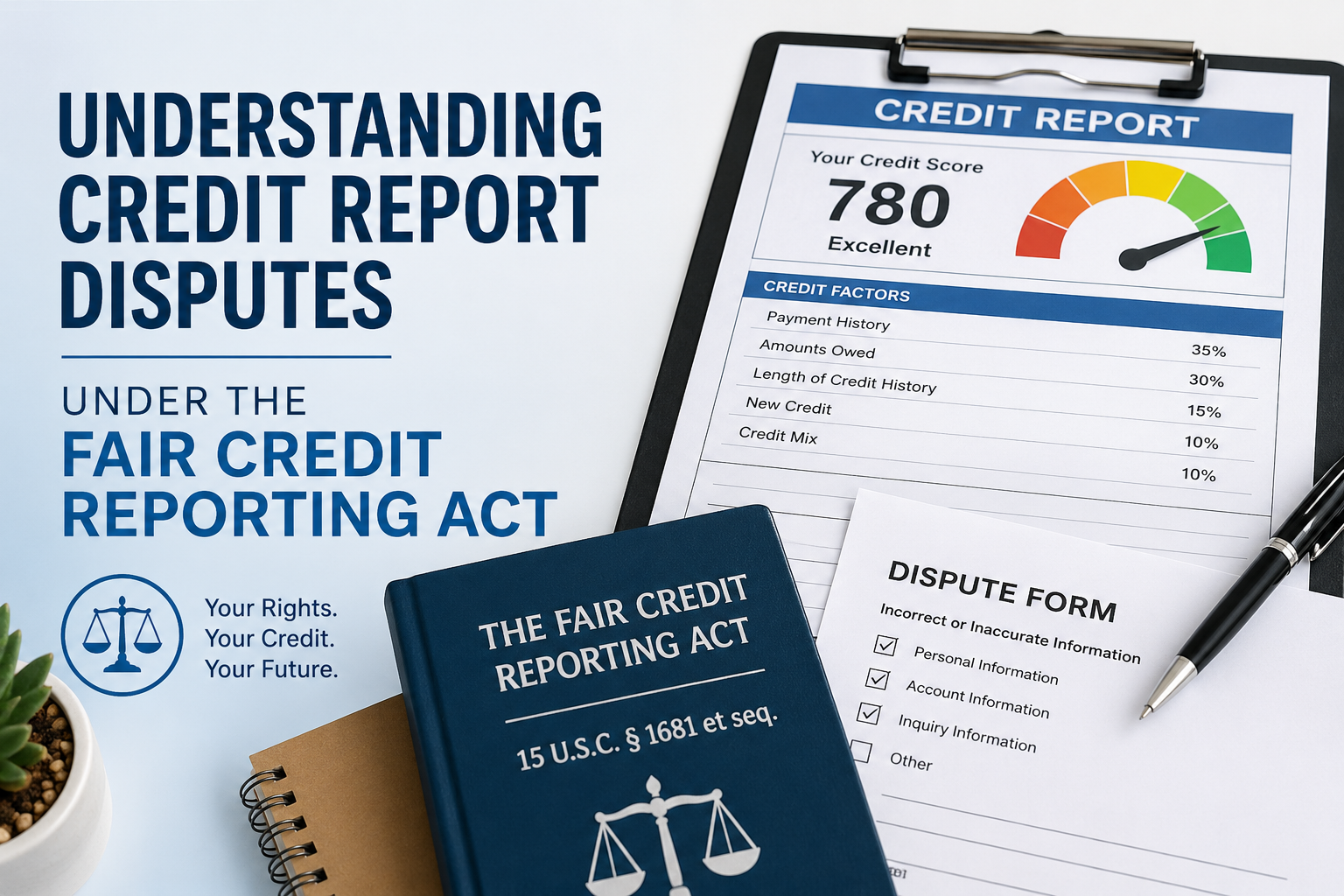
Step 4: Address Negative Credit Factors At the same time, we reviewed the owner’s personal credit profile in detail. This included examining late payments, collection accounts, charge-offs, reporting inaccuracies, and other factors potentially affecting financing readiness. The objective wasn’t simply improving a score; the objective was strengthening the overall credit profile lenders review during underwriting.
-
Step 5: Position the Business for Future Financing The final phase involved helping the company become more attractive to future lenders. This meant stronger documentation, improved utilization, better reporting activity, a cleaner credit profile, and improved cash-flow management. In other words, we focused on positioning rather than just funding.
The Outcome
Within approximately 45 to 90 days, significant progress had already been made. While every situation is different and results vary, this particular company experienced improvements across multiple areas: reduced utilization, improved business credit activity, greater vendor purchasing flexibility, better cash-flow management, and improved financing readiness.
Most importantly, the owner was no longer relying on the same financial habits that created the pressure in the first place. The business was operating from a stronger foundation.
The Lesson
One of the biggest misconceptions in business financing is that capital solves financial problems. Sometimes it does. But often, capital simply magnifies existing problems if there isn’t a strategy behind it. A $100,000$ short-term capital injection can become another burden, or it can become a tool. The difference is how it’s deployed.
In this case, the capital wasn’t used for unnecessary spending. It wasn’t used to fund lifestyle purchases. It wasn’t used to mask deeper issues. Instead, it was used strategically to reduce financial pressure, improve credit positioning, preserve cash flow, strengthen business credit, and improve long-term financing readiness. That’s the difference between borrowing money and building a financial strategy.
Another Real Construction Scenario
Let’s look at a simplified example. A contractor has the following outstanding debt obligations:
| Account | Balance |
| Business Card #1 | $28,000 |
| Business Card #2 | $17,000 |
| Personal Card Used for Business | $14,000 |
| Equipment Account | $11,000 |
| Total Obligations | $70,000 |
The business is profitable. Projects are active. Revenue continues. Yet revolving utilization is creating underwriting concerns.
Instead of continuing to rotate balances from card to card, the owner may explore a structured working capital strategy. The objective is not simply borrowing more money. The objective is improving overall financial positioning. That could involve lowering utilization, improving monthly cash flow, consolidating obligations, creating payment predictability, and preserving working capital for future projects.
The Requirements Most Owners Never Prepare For
One of the biggest reasons financing applications fail is that owners wait until they need money before organizing their file. Most lenders eventually want to review some combination of:
-
Business Bank Statements: Often the most recent six months.
-
Business Debt Schedule: Current obligations, payment amounts, and outstanding balances.
-
Personal Credit: Many programs still evaluate the guarantor. Some commonly look for FICO scores around 660 or higher, depending on the lender and product.
-
Revenue Requirements: Certain programs may require annual business revenue around $250,000$ or more.
-
Time in Business: Two years in business is a common benchmark across many programs.
-
Cash Flow Analysis: Lenders want to know one thing: Can the business comfortably support the payment? That is where DSCR (Debt Service Coverage Ratio) and cash-flow analysis often become important underwriting factors.
Why We Focus on Positioning First
At WaterWorks Agency, we rarely begin with: “How much do you need?” Instead, we begin with: “What is preventing you from qualifying for better financing?” Sometimes it’s utilization. Sometimes it’s documentation. Sometimes it’s business credit. Sometimes it’s tax issues. Sometimes it’s MCA dependency. The answer is different for every business.
The Goal Isn’t More Debt
This is where many financing conversations go wrong. The goal is not accumulating more debt. The goal is creating a stronger financial profile. For construction companies, that often means:
-
Lower utilization
-
Better cash-flow management
-
Stronger business credit
-
Cleaner documentation
-
More predictable payment structures
-
Better financing options over time
When those areas improve, the business often becomes more attractive to lenders, vendors, and future financing opportunities. And that’s usually where real growth begins—not with the next approval, but with the financial foundation that makes better approvals possible in the future.
Construction Financing Programs We Commonly Assist With
Construction companies often require access to capital for payroll, materials, equipment, project mobilization, and growth opportunities. Below are several financing solutions commonly used by established contractors and construction businesses.
1. Business Line of Credit
| Requirement | Details |
| Funding Amount | $25,000 – $150,000 |
| Minimum FICO | 660+ |
| Time in Business | 2+ Years |
| Liquid Credit Score | 150+ |
| Payments | Interest-Only Monthly Payments |
| Structure | Revolving Line of Credit |
| Underwriting | Business Bank Statement Based |
Documents Required (Line of Credit)
-
Business Bank Statements: 6 Months
-
Business Debt Schedule: Yes
-
Driver’s License: At Closing
-
Voided Business Check: At Closing
2. SBA 7(a) Working Capital Program
| Requirement | Details |
| Funding Amount | $30,000 – $500,000 |
| Time in Business | 2+ Years |
| Minimum FICO | 660+ |
| Annual Revenue | $250,000+ |
| Debt Service Coverage Ratio | 1.15x+ |
| Tax Liens | None |
| Bankruptcies | None Within 3 Years |
| Charge-Offs | No Recent Charge-Offs |
| Government Loans | Current Status Required |
Common Uses (SBA 7(a))
-
Working Capital
-
Inventory Purchases
-
Hiring Employees
-
Marketing
-
Debt Refinancing
3. Streamlined SBA Program
| Requirement | Details |
| Funding Amount | $30,000 – $150,000 |
| Time in Business | 2+ Years |
| Minimum FICO | 700+ |
| Annual Revenue | $250,000+ |
| Tax Liens | None |
| Bankruptcies | None Within 3 Years |
| Typical Funding Timeline | As Little As 10 Business Days After Approval |
Typical Documentation (Streamlined SBA)
-
Personal Tax Returns: 1 Year
-
Business Tax Returns: 2 Years
-
Driver’s License: Required
-
Business Bank Statements: 6 Months
4. Bank Term Loan Program
| Requirement | Details |
| Funding Amount | $30,000 – $350,000 |
| Time in Business | 2+ Years |
| Minimum FICO | 660+ |
| Annual Revenue | $250,000+ |
| Tax Liens | None |
| Recent Bankruptcy | None Within 3 Years |
| Recent Foreclosure | None Within 3 Years |
| Charge-Offs | No Recent Charge-Offs |
| Funding Timeline | Typically Around 2 Weeks |
Common Uses (Bank Term Loan)
-
Working Capital
-
Equipment Purchases
-
Construction & Remodeling
-
Marketing
-
Business Acquisition
-
Debt Refinancing
-
Hiring Employees
Construction Financing Submission Checklist
To evaluate available financing options, we typically request the following:
| Required Documents | Purpose |
| 6 Months Business Bank Statements | Cash Flow Review |
| Business Debt Schedule | Existing Debt Analysis |
| Profit & Loss Statement | Revenue Verification |
| Balance Sheet | Financial Position |
| Business Tax Returns | Qualification Review |
| Personal Tax Returns | Guarantor Review |
| Driver’s License | Identity Verification |
| Voided Business Check | Funding Setup |
Financing Strategy Matters
Many construction companies wait until cash flow becomes a problem before seeking funding. The strongest operators often secure financing before they need it, allowing them to take on larger projects, purchase materials in advance, maintain payroll, and improve overall project execution.
Strategic capital is often less expensive than emergency capital and can position a company for long-term growth.